Industrial parts & seals · O-rings & seals
Silicone seal ring
Round, square, D-section and flanged seal rings moulded in VMQ or LSR. The numbers on this page are public reference values — each one is confirmed against your drawing before a price is issued.
Both buttons pre-fill this product; the difference is whether you want the ring to the reference size, or one built to your geometry.
01 — Specification
Specification
- MaterialVMQ (HTV, platinum or peroxide cure) and LSR
- Hardness40–70 Shore A standard; 30–80 on request
- SectionsRound, square, D, flanged, spliced cord
- Size range3–600 mm inside diameter, 1–20 mm section
- ToleranceISO 3302-1 class M2 / M3
- Service temperature−55 to +200 °C
- Compression set≤ 25 % after 22 h at 175 °C
- ColourNatural translucent, black, or matched to your Pantone
- Contact documentsFDA 21 CFR 177.2600 and LFGB compounds available
Reference only. The values above are ranges published across the silicone sealing industry (ISO 3302-1 tolerance classes, standard VMQ datasheets), not a certificate for a specific part we have made. Hardness, compression set and tolerance all move with the compound and the section; the datasheet issued with your quotation is the one that binds.
02 — Reference image
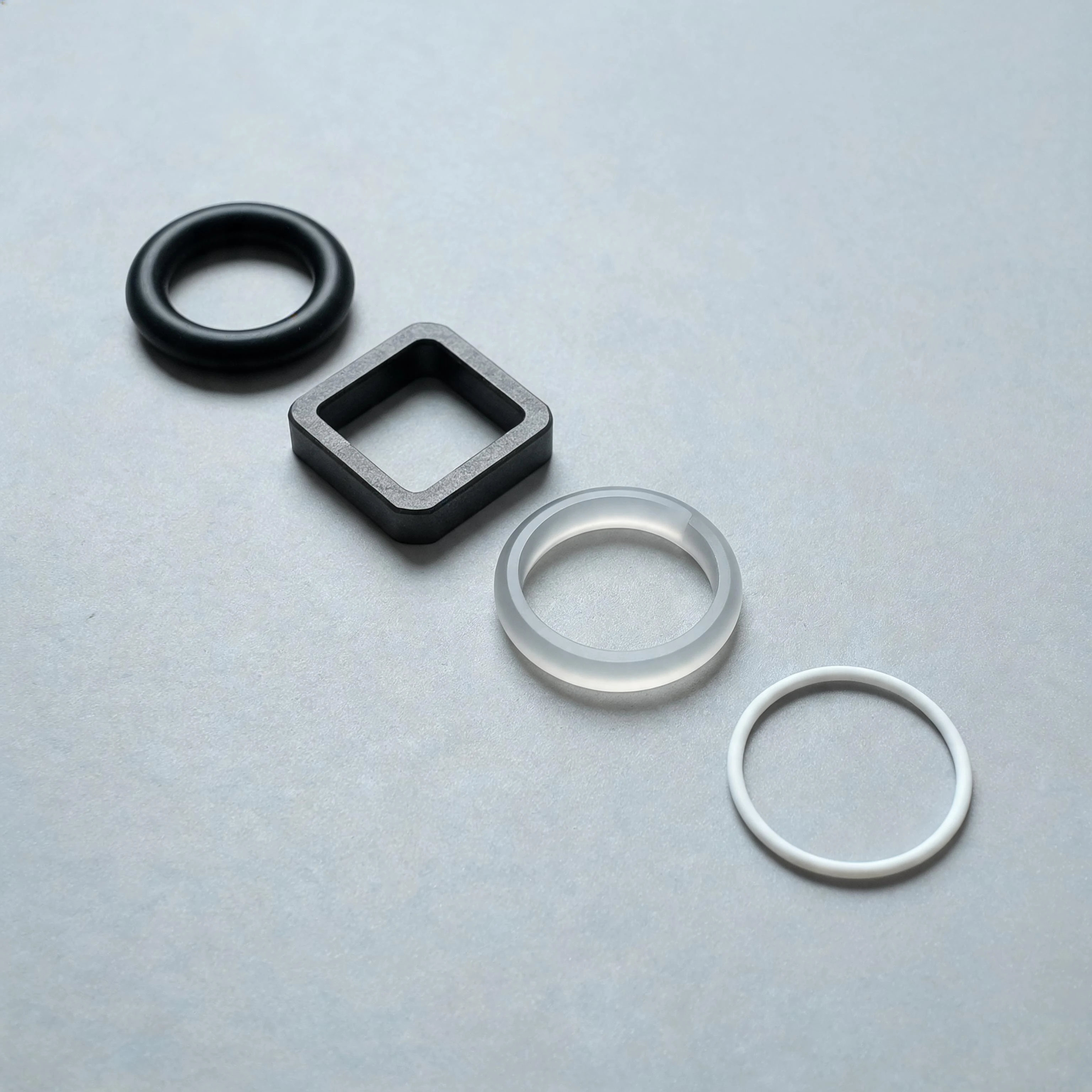
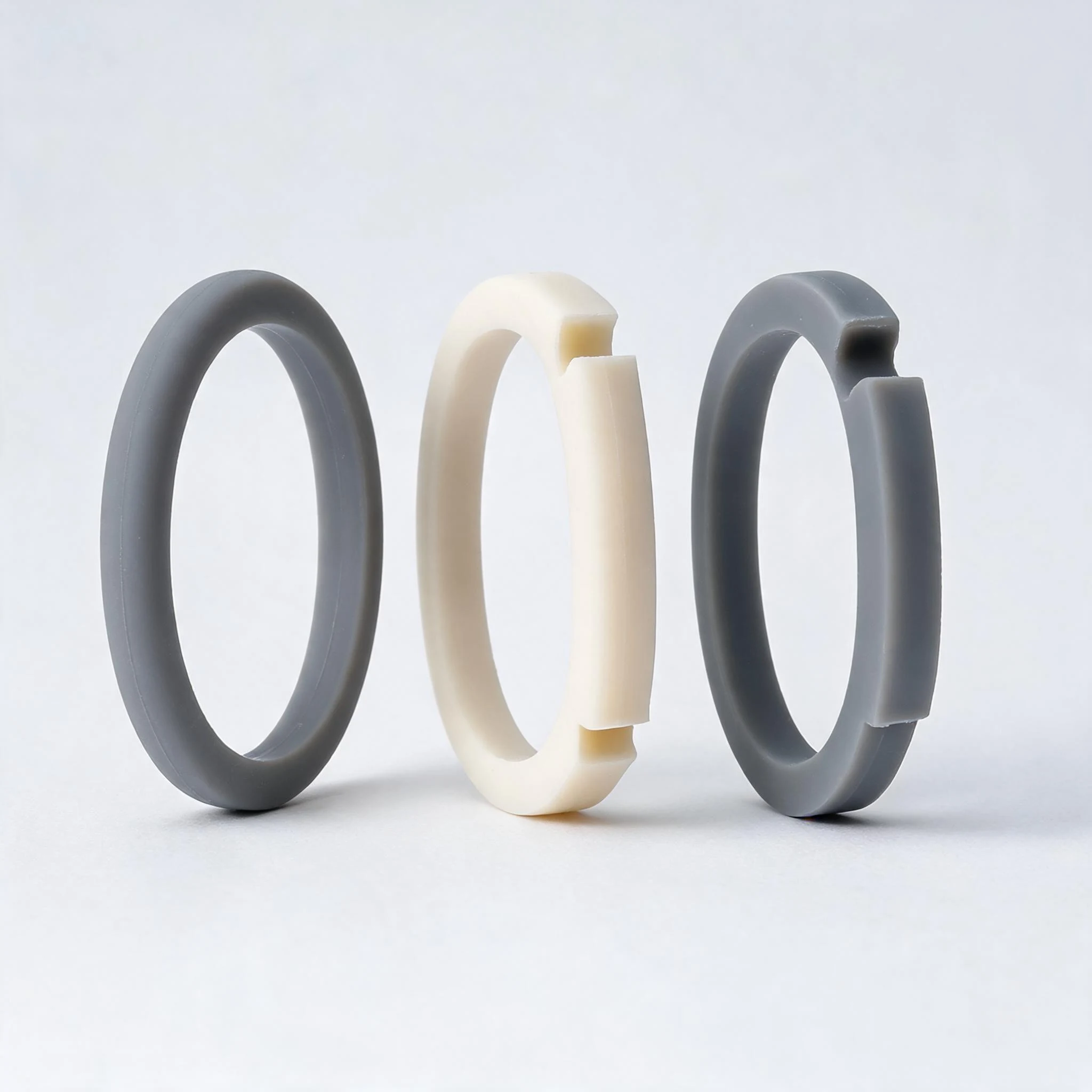
What the family looks like
03 — What it is
About this part
A silicone seal ring is a seal with a defined section: the shape of the cut edge is what does the work, not the outer diameter. A round section rolls and conforms; a square section holds its position in a rectangular groove; a D-section puts a flat face against the mating surface and a curved back into the groove; a flanged ring adds a lip that covers the groove edge or takes a fixing.
Standard cord sizes can be spliced or moulded from platform tooling. Anything with a non-round section, a flange, a locating feature or a bore tolerance tighter than the table above needs its own tool — that is a different quotation and a different schedule.
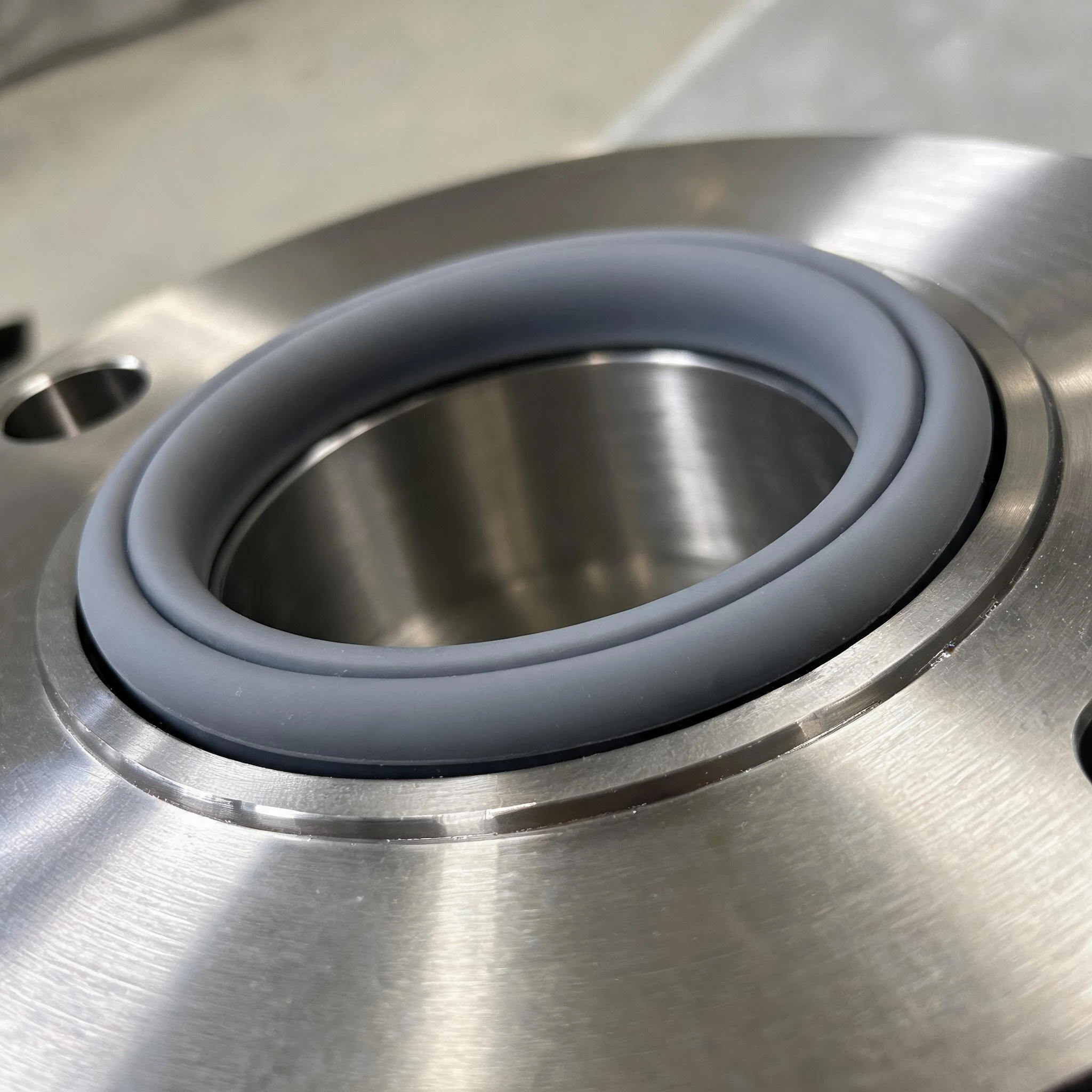
Where it stops: a ring seals, it does not clamp. If the assembly relies on the ring to hold two parts together, or if the groove has no support on the low-pressure side, the failure is in the housing design, not the compound.
04 — Section choice
Four sections, four jobs
As a rule: pick the section the groove was machined for. Changing section to fix a leak usually moves the problem to the other face.
05 — Reading a size
Inside diameter, section, groove fill
A ring is specified by inside diameter (ID) and cross-section (CS); outside diameter follows as ID + 2 × CS. Ordering by outside diameter is the most common mistake in this category — a 2 mm wall changes OD by 4 mm while the sealing diameter stays the same.
The second number that matters is squeeze: the section is compressed by roughly 10–25 % of its thickness in a static groove. Push past that and the rubber has nowhere to go; it extrudes into the gap, takes a set, and stops sealing on the next cycle. Groove fill — the share of the groove volume the ring occupies — is the companion check, and it is the one that decides whether a soft compound survives a pressure spike.
The working through it is in the note Silicone seal ring sizing: ID, cross-section and groove fill.
06 — Related
Where this page connects
- O-ring, AS568 series300 standard sizes at 70 Shore A, from platform tooling, quoted per size.Open
- Silicone seal ring sizing noteID, cross-section, squeeze and groove fill — the four numbers that decide whether a ring seals.Read
- Silicone ring (wedding band)Looking for the wearable band instead of a gasket? It sits on the gifts shelf, with its own sizing table.Open
- Part finderSend a part number or a photo of the old ring; a person cross-references it within 24 hours.Open
07 — Next step
Two routes, one form
Buy finished: ships to the reference size and the MOQ confirmed on your quotation. Customize: colour, marking, packaging and hardness on the same tool, or a new section and flange tooled to your drawing.