
Gifts & promo · Rings & wearables
Silicone ring — wedding band and active ring
A band you can leave on at the gym, on site and in theatre: platinum-cured silicone, 7–9 mm wide, US 4–13. Sizes on this page are public reference values — we confirm the fit and the mould before quoting.
Both buttons pre-fill this product; the difference is whether you want our standard band, or your design, colour and packaging.
01 — Specification
Specification
- MaterialPlatinum-cured silicone (VMQ); skin-contact grade
- Hardness40–60 Shore A, soft-touch band
- SizesUS 4–13 / EU 44–72, half sizes on request
- Band width7, 8 or 9 mm
- Wall thickness2.0–2.5 mm
- Service temperature−40 to +200 °C
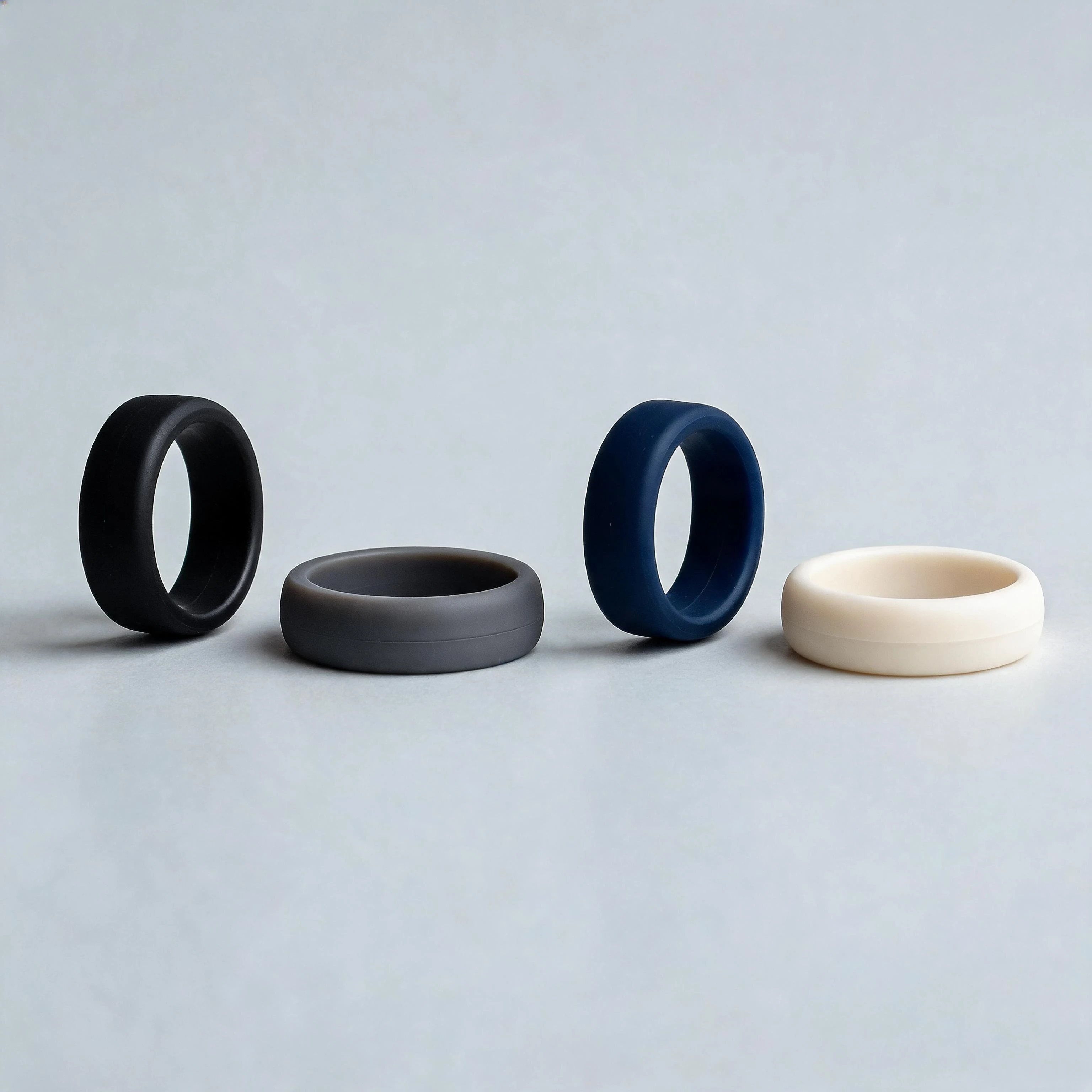
- ColourBlack, graphite, navy, sand, white; Pantone match
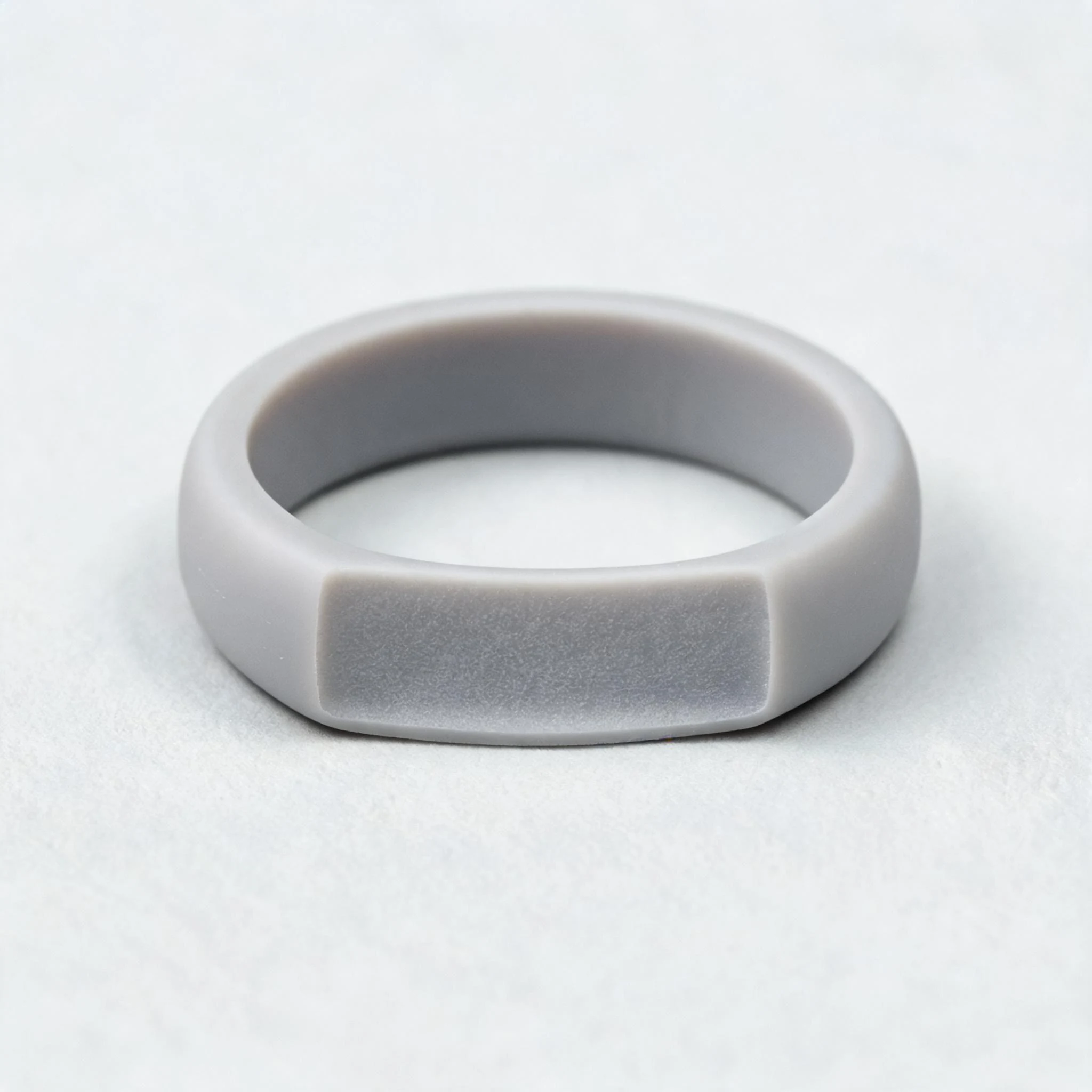
- MarkingInner-band laser engraving, debossed logo on the outer face
- PackagingPoly bag, organza pouch, printed card, retail box
Reference only. Ring sizes, widths and shore values above follow common practice in the silicone-band trade; they are not a certificate for a specific production lot. Fit is confirmed against a physical size set, and the band you approve is the band we run.
02 — Reference images
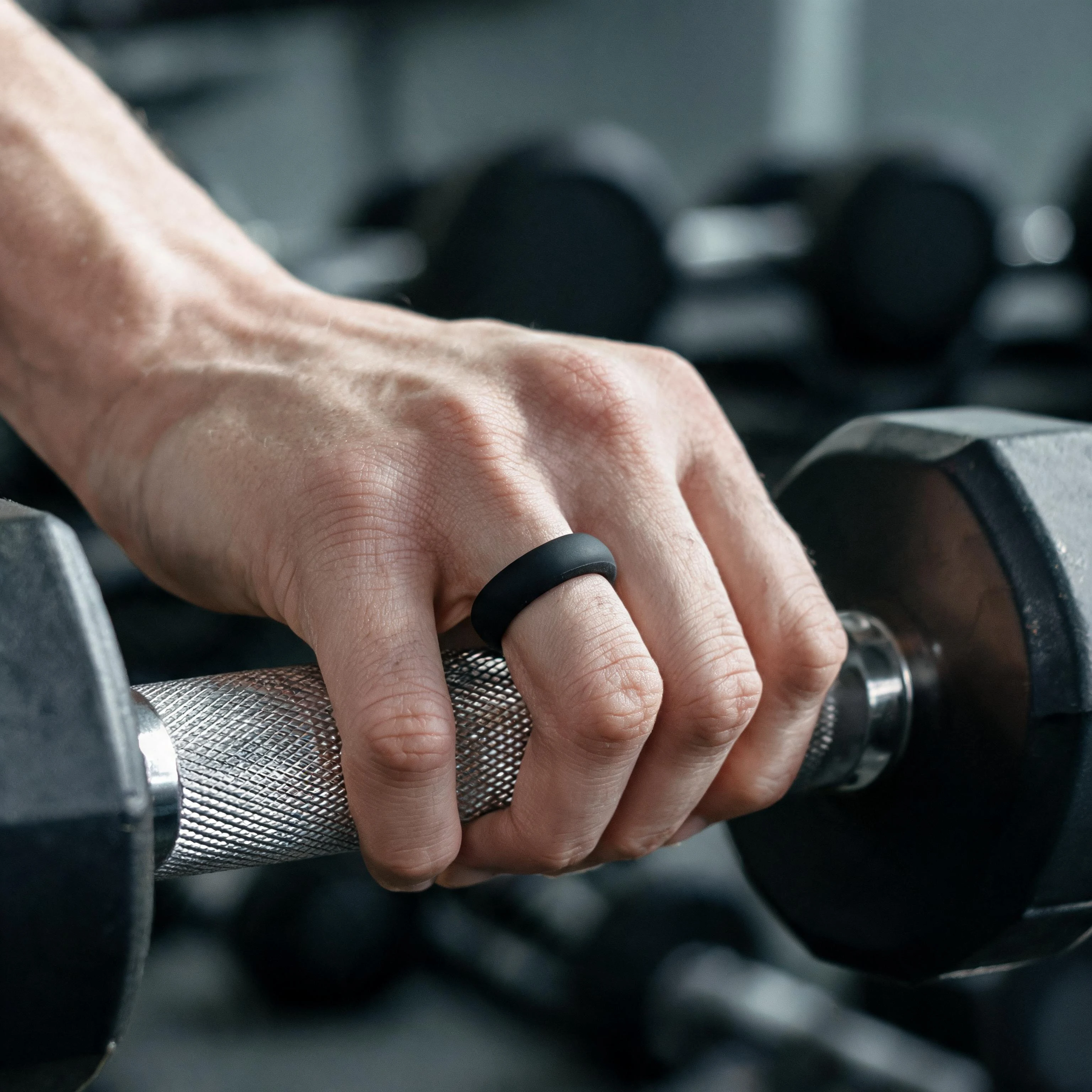
The band, and where it gets worn
03 — What it is
About this product
A silicone band solves three problems a metal ring creates. It does not conduct, so it stays on around a panel, a battery terminal or an induction heater. It gives before it cuts, which matters when a hand catches on a rack or a rung. And it has no resale value, so it can be worn in a hospital, a site or a pool without a debate.
The trade is that silicone is soft. A band that seals against the finger at 40 Shore A can roll when a bar is pulled through it; a 60 Shore A band holds its shape but feels stiffer on a knuckle. Width does the rest: a wider band spreads pressure, a narrower one passes over a joint more easily.
Where it stops: these are worn accessories, not lifting equipment and not seals. If the band has to survive chemical immersion or take a structural load, it belongs in another category — the seal-ring shelf covers that.
04 — Fit
Sizing
Measure the circumference of the finger, not the diameter of an old ring: a band that has been worn daily is out of round. Wrap a strip of paper at the base of the finger, mark where it meets, measure the length, and read the size from the table. Measure in the afternoon — a finger is measurably larger at 6 pm than at 9 am.
Reference table only. US/EU conversions and inner diameters vary by a few tenths of a millimetre between size standards; a physical size set settles it. Half sizes and custom diameters are tooled to order.
Two practical rules: a 9 mm band needs roughly half a size more than a 7 mm band on the same finger, and a band should pass the knuckle with a little resistance and then sit without pinching. If it spins freely, it will slide off in water.
05 — Related
Where this page connects
- Silicone ring fit: size, width and hardnessWhy a band that fits at 9 am is loose at 6 pm, and how width changes the size you need.Read
- Wristbands & eventsThe same skin-contact compounds, in event and access-control bands with RFID inlays.Open
- Silicone seal ringsLooking for a gasket instead of jewellery? Round, square and D-section rings live here.Open
06 — Next step
Two routes, one form
Buy finished: our standard band in the sizes and colours above, boxed or bagged. Private label: your Pantone, your engraving file, your card and box — sampled before the run, priced per size.