 PRODUCT
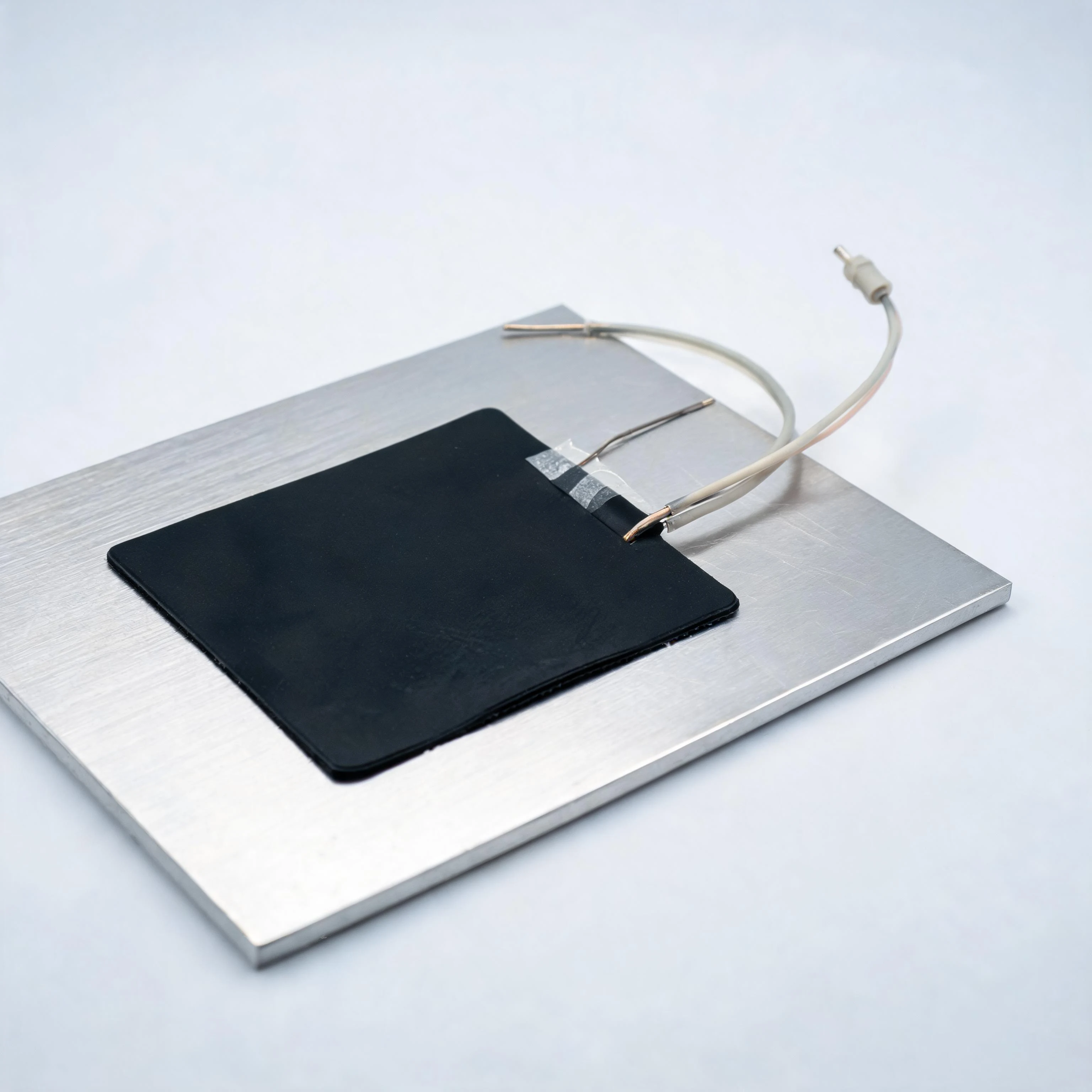
Silicone rubber heater
Etched foil or wire wound, 0.4–1.5 mm, to 10 W/cm², sensors laminated in, 100 % hipot tested.
ViewCustomizable

Industrial parts & seals · Heaters & thermal
Silicone rubber heating elements — a resistor circuit laminated into silicone, thin enough to wrap a pipe and stable enough to stay flat through years of cycling.
01 — Products
PRODUCTEtched foil or wire wound, 0.4–1.5 mm, to 10 W/cm², sensors laminated in, 100 % hipot tested.
ViewCustomizable
02 — What this shelf covers
A silicone heater replaces a metal-sheath element where the heat source has to follow a shape: a sealing bar, a nozzle, a drum, a pipe, a battery module face. The element is thin, the watt density is spread over the whole outline instead of a coil, and the surface is sealed — washable, and safe to put against a part.
The specification that matters is not the heater, it is the interface: how flat the metal is, how hard it is clamped, and how hot the bond line runs. That is why we ask for the drawing and the attachment method before quoting a watt density.
The two engineering write-ups behind this shelf are why heaters bulge and delaminate and how to select one in five numbers.
Two pages in 48 hours: what will not mold, and what it will cost to make it mold correctly.
Start a DFM review →320+ rollers, 200 masking specs and 300 O-ring sizes, checked by a person.
Open the part finder →